
Python has consolidated its position as the premier language for data engineering, automation, and machine learning. The Data-Driven Alpha: Engineering Financial Sovereignty through Python and BI in 2026 represents an essential competency for data scientists and developers in 2026. With the proliferation of cloud workloads, building scripts that execute fast and manage memory efficiently is critical. This guide provides actionable blueprints for professional Python development.
Table of Contents
1. Understanding the Core Mechanics of Python & Data Automation
Python's simplicity comes from its high-level abstractions, but this can lead to performance trade-offs. The Global Interpreter Lock (GIL) prevents multiple native threads from executing Python bytecodes at once, making multi-threaded CPU-bound programs slow. For CPU-bound parallel workloads, developers must use multiprocessing or offload tasks to compiled C-libraries (like numpy or pandas).
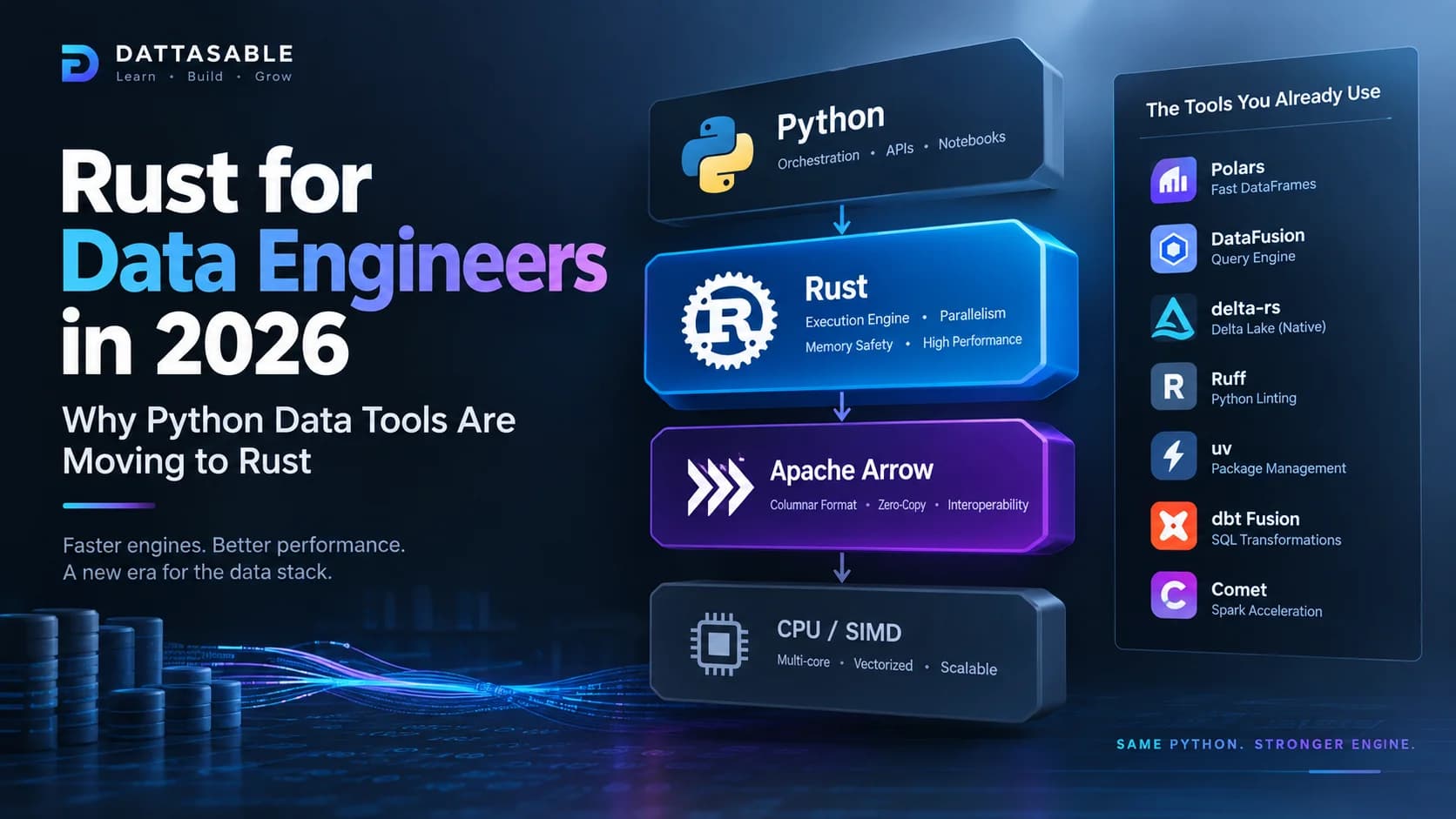
Data pipeline engineering relies on the extraction, transformation, and loading (ETL) of data. Python scripts are excellent for writing ETL logic. However, holding large datasets in memory using standard lists or dicts can crash servers. Using generators, chunking database reads, and using memory-efficient runtimes (like DuckDB or Polars) are the gold standards for modern automation.
2. Step-by-Step Implementation Blueprint
To successfully deploy these capabilities in a production environment, engineering teams must execute a structured pipeline. The code snippet below demonstrates how a professional-grade configuration is structured:
# Example of Memory-Efficient Chunked ETL Pipeline in Python
import pandas as pd

def process_data(file_path):
    print(f"Reading {file_path} in chunks...")
    # Read CSV in chunks of 100,000 rows to optimize memory
    for chunk in pd.read_csv(file_path, chunksize=100000):
        # Perform transformation
        transformed_chunk = chunk[chunk['status'] == 'Active']
        # Load to database
        transformed_chunk.to_sql('active_users', con=db_engine, if_exists='append', index=false)
3. Core Comparison and Metrics
Here is an operational breakdown illustrating how various approaches behave under different system constraints:
| Library | Execution Engine | Best Use Case |
|---|---|---|
| Pandas | Single-threaded C/Python | Small-medium datasets (< 5 GB) & quick audits. |
| Polars | Multi-threaded Rust | Medium-large datasets (5 GB - 50 GB) on single node. |
| DuckDB | Vectorized C++ (SQL) | Embedded analytics, parquet queries, and local BI labs. |
4. Production Best Practices
When implementing these methods in live environments, make sure your team adheres to the following checklist:
- Use generators and generators expressions to handle stream data with O(1) memory.
- Swap Pandas for Polars or DuckDB when processing datasets larger than 10 GB.
- Implement structured logging and automated retry decorators for ETL endpoints.
- Profile scripts using cProfile and memory_profiler to locate execution bottlenecks.
5. Architectural Insight
"Deploying visual frontends or complex backend queries without a deep analysis of lock durations, payload compression, and edge caching is a recipe for expensive compute bills and slow adoption. True technical excellence requires optimizing every byte along the network pathway." — Datta Sable, Principal BI Consultant
6. Frequently Asked Questions (FAQ)
Q1: Why is Polars faster than Pandas?
Polars is written in Rust and built on the Apache Arrow memory model. It utilizes parallel execution and query planning (lazy evaluation) to execute operations across multiple CPU cores simultaneously, unlike Pandas which is single-threaded.
Q2: How does Python manage memory?
Python uses reference counting and a generational garbage collector. When an object's reference count drops to zero, its memory is deallocated instantly. The garbage collector runs periodically to clean up cyclic references.
7. Conclusion & Summary
Python remains a power tool for data engineers. By choosing the right data structures, utilizing chunking strategies, and scaling to modern vectorized engines like Polars and DuckDB, you can construct pipelines that process millions of records with minimal memory footprints.