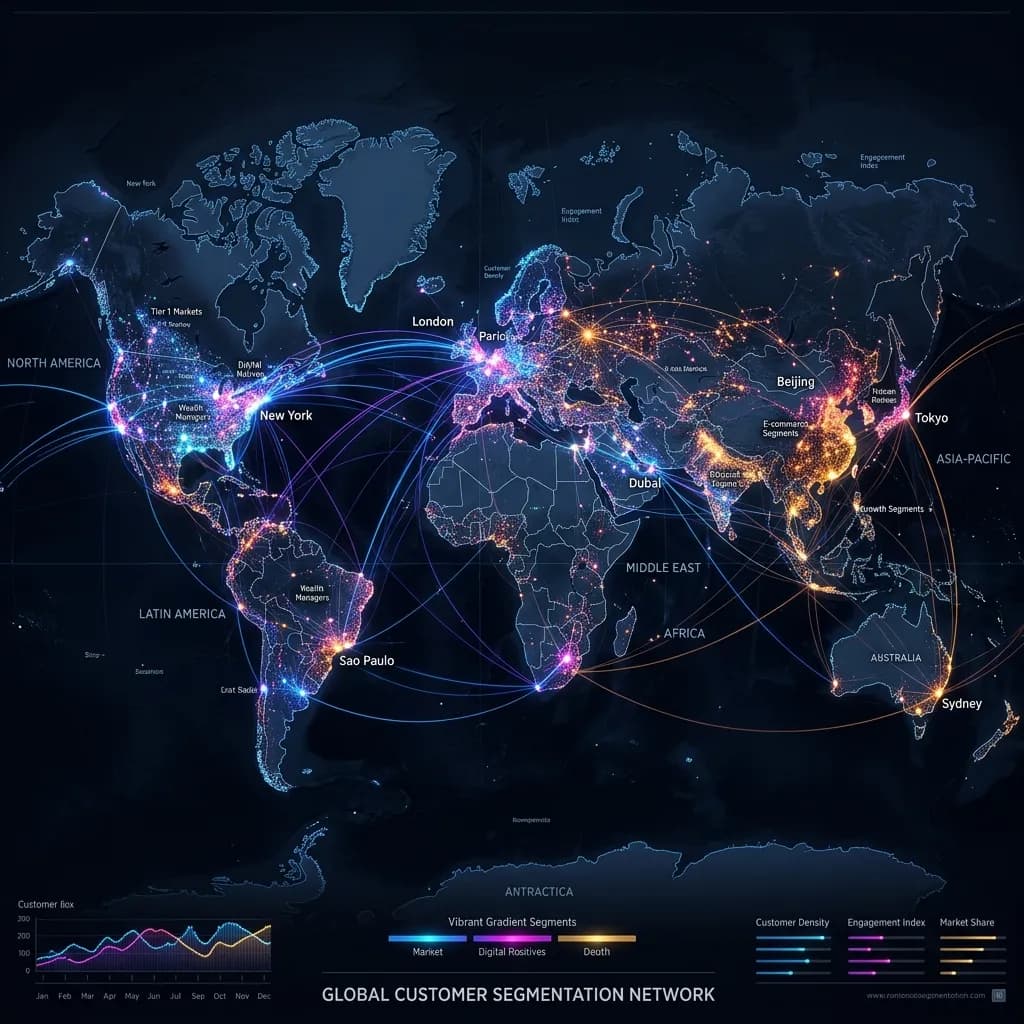

Customer Data Platforms compile profiles from different databases to personalize marketing campaigns. We analyze the architecture needed to sync customer traits across web platforms.
Table of Contents
1. 1. Building Real-Time Profile Sync Engines
A Customer Data Platform must ingest millions of clickstream events and resolve customer identities across mobile apps, email clients, and web portals. To handle this, the backend architecture must utilize event streams (like Apache Kafka) to serialize profile writes. Identity resolution rules merge anonymous event paths into unified profiles immediately when a customer registers or logs in. Caching resolved profiles in Redis ensures that personalization layers (like recommendation engines) can query attributes in sub-seconds during active browser sessions.
2. 2. Event Tracking Script for CDP Profiles
This script tracks custom user interactions and sends them to your CDP endpoint:
function trackUserAction(userId, eventName, attributes) {
  const payload = {
    userId,
    eventName,
    properties: attributes,
    timestamp: new Date().toISOString()
  };

  fetch('https://cdp.domain.com/events', {
    method: 'POST',
    headers: { 'Content-Type': 'application/json' },
    body: JSON.stringify(payload)
  }).catch(err => console.error('CDP event upload failed', err));
}
3. 3. Core Comparison and Metrics
The table below provides a detailed technical comparison of the operational paradigms under review:
| CDP Type | Event Sync Latency | Operational Cost |
|---|---|---|
| Batch-based CDP (Daily) | 24 hours | Low |
| Micro-batch CDP (Hourly) | 30 mins - 1 hour | Medium |
| Streaming CDP (Real-time) | <1.5 seconds | High |
4. 4. Production Best Practices
When running this configuration in a production cluster, your engineering team must adhere to the following checklist:
- Deploy row-level encryption on all customer identity profiles.
- Implement cookie-consent checks before loading track event scripts.
- Use message queues to throttle peak write traffic into transactional profile databases.
- Standardize event naming conventions (e.g. noun-verb format) across all client apps.
5. 5. Architectural Insight
"Marketing precision requires database precision. If your tracking event structures are inconsistent, your personalization will be irrelevant." — Datta Sable, Principal BI Consultant
6. 6. Frequently Asked Questions (FAQ)
Q1: What is the difference between CRM and CDP?
CRMs track sales interactions and manual customer outreach, while CDPs unify real-time digital behavioral data from all customer touchpoints automatically.
Q2: How does identity resolution work?
Identity resolution links anonymous events (tracked via cookies) to a known customer profile once they login or identify themselves via email.
7. Strategic Outlook & Scalability
When incorporating solutions in Marketing, architectural scalability should be prioritized alongside immediate operational gains. For workloads relating to "Precision Marketing: Using Customer Data Platforms (CDP) for Hyper-Personalized Growth", teams must expect substantial growth in transactional volume and data velocity over a multi-year horizon. Mitigating this risk requires a commitment to decoupled database systems, strict data validation layers, and automated end-to-end integration workflows. By implementing continuous validation checks and maintaining detailed telemetry dashboards, enterprise engineers can identify bottleneck conditions before they cascade into high-severity client outages.
In the long term, investing in clean software standards and developer ergonomics will reduce maintenance overhead and accelerate release frequency, allowing your organization to remain agile and competitive in a rapidly changing technical landscape. Furthermore, establishing clear ownership profiles for each system component ensures that documentation and troubleshooting protocols remain in lockstep with codebase evolutions. This disciplined approach prevents technical debt accumulation, reduces onboarding latency for new developers, and guarantees that your operational infrastructure can adapt dynamically to emerging business requirements.
Ultimately, a successful deployment is not just about making the code work today, but ensuring it is maintainable for the next five years. By building modules that are isolated and well-tested, you protect the core user experience from regression failures. This operational resilience translates directly into customer trust and long-term brand equity, providing a solid foundation for sustainable commercial growth.
8. Conclusion & Summary
Achieving stability and execution speed requires a dedicated engineering strategy, strict validation, and active telemetry. Implementing these practices will optimize your workflows and ensure system reliability.