
Preparing for the DP-700: Implementing Data Engineering Solutions Using Microsoft Fabric exam? This ultimate study guide contains everything you need. You will master medallion architectures, high-performance PySpark data pipelines, advanced orchestration scheduling, workspace access controls, and capacity utilization monitoring to pass the DP-700 exam on your first attempt.
The DP-700 Study Guide 2026 is the premier resource for cloud engineers and data warehouse architects transitioning to the SaaS-oriented modern data stack. By establishing skills in Spark performance tuning and enterprise governance, this credential sets you apart in the job market.
Quick Answer: What is the DP-700 Exam?
- Credential Name: Microsoft Certified: Fabric Data Engineer Associate
- Exam Duration: 120 minutes
- Number of Questions: 40-52 questions (Scenario-based, case studies)
- Passing Score: 700 / 1000
- Cost: $165 USD
- Study Time: 4-6 weeks (6-12 hours/week)
Why the DP-700 Certification Matters in 2026
As organizations decommission complex PaaS architectures (like Azure Synapse workspaces and complex Azure Data Factory configurations), they are hiring Fabric Data Engineers. These professionals specialize in deploying data platforms within a single, governed SaaS layer, achieving major cost efficiencies.
Skills Measured & Exam Weight
| Exam Domain | Weight | Key Sub-topics |
|---|---|---|
| Design and Implement Data Ingestion and Transformation | 35-40% | Spark notebooks, pipeline orchestration, CDC (Change Data Capture), medallion schema designs. |
| Design and Implement a Data Platform | 30-35% | Lakehouse configuration, shortcut integration, Delta table optimization, Liquid Clustering. |
| Monitor and Optimize Solutions | 15-20% | Fabric Capacity Metrics App, Spark application logs, tuning execution skew. |
| Secure and Govern Data | 10-15% | OneLake security boundaries, workspace permissions, data masking, lineage tracking. |
Real-World Scenario: Implementing Medallion Pipelines & Optimizing Partition Skew
An automotive telemetry dataset lands 50GB of files daily in the Bronze layer of a Lakehouse. During PySpark processing in Silver, a significant skew is identified where one partition contains 80% of the volume, causing execution stages to hang. As a Fabric Data Engineer, you must optimize the pipeline.
Solution Architecture: 1. Apply **Liquid Clustering** on the target Delta table instead of static partitioning. This allows dynamic layout optimization based on frequently queried columns. 2. Use **Salted Keys** in the PySpark join operations to distribute high-cardinality partitions evenly across Spark nodes. 3. Configure the **Fabric pipeline** to scale up to an executive-level starter pool dynamically during high load. 4. Set up audit logging inside the capacity monitoring dashboard to measure compute units consumed by the Spark notebooks.
Step-by-Step 6-Week Study Roadmap
- Week 1: Lakehouse Architecture & Shortcuts - Master managed vs unmanaged tables. Practice creating shortcuts to S3 and ADLS Gen2, and understand their performance characteristics.
- Week 2: Advanced PySpark Data Pipelines - Write high-performance Spark jobs, configure V-Order, clean schemas, and implement CDC.
- Week 3: Medallion Architecture Implementation - Learn the data flow rules from raw Bronze to processed Silver, and clean Gold star-schemas. See our detailed DP-700 vs DP-203 Comparison.
- Week 4: Fabric Pipeline Orchestration - Study copy activities, custom API triggers, loops, conditional pathways, and scheduling mechanisms.
- Week 5: Fabric Governance, Domains & Security - Understand workspace roles, row-level security on the SQL endpoint, domain configuration, and data lineage.
- Week 6: Performance Optimization & Capacity Diagnostics - Learn how to analyze the Capacity Metrics app, optimize Spark clusters, and read diagnostic logs. Take practice assessments.
Sample Exam Questions
Question 1: You have a Delta Lake table that needs frequent optimizations for multiple query filters. You want to implement a flexible partitioning strategy that replaces standard partitioning and Z-Ordering. What should you configure?
Answer: **Liquid Clustering**. Liquid clustering simplifies data tuning by reorganizing physical data layout dynamically based on specified clustering columns, avoiding the pitfalls of static partition keys.
Careers & Salaries
| Role | USA Salary | India Salary | Europe Salary |
|---|---|---|---|
| Fabric Data Engineer | $120,000 - $160,000 | ₹15L - ₹32L | €80,000 - €110,000 |
| Enterprise Data Architect | $150,000 - $210,000 | ₹25L - ₹55L | €100,000 - €140,000 |
Frequently Asked Questions (FAQ)
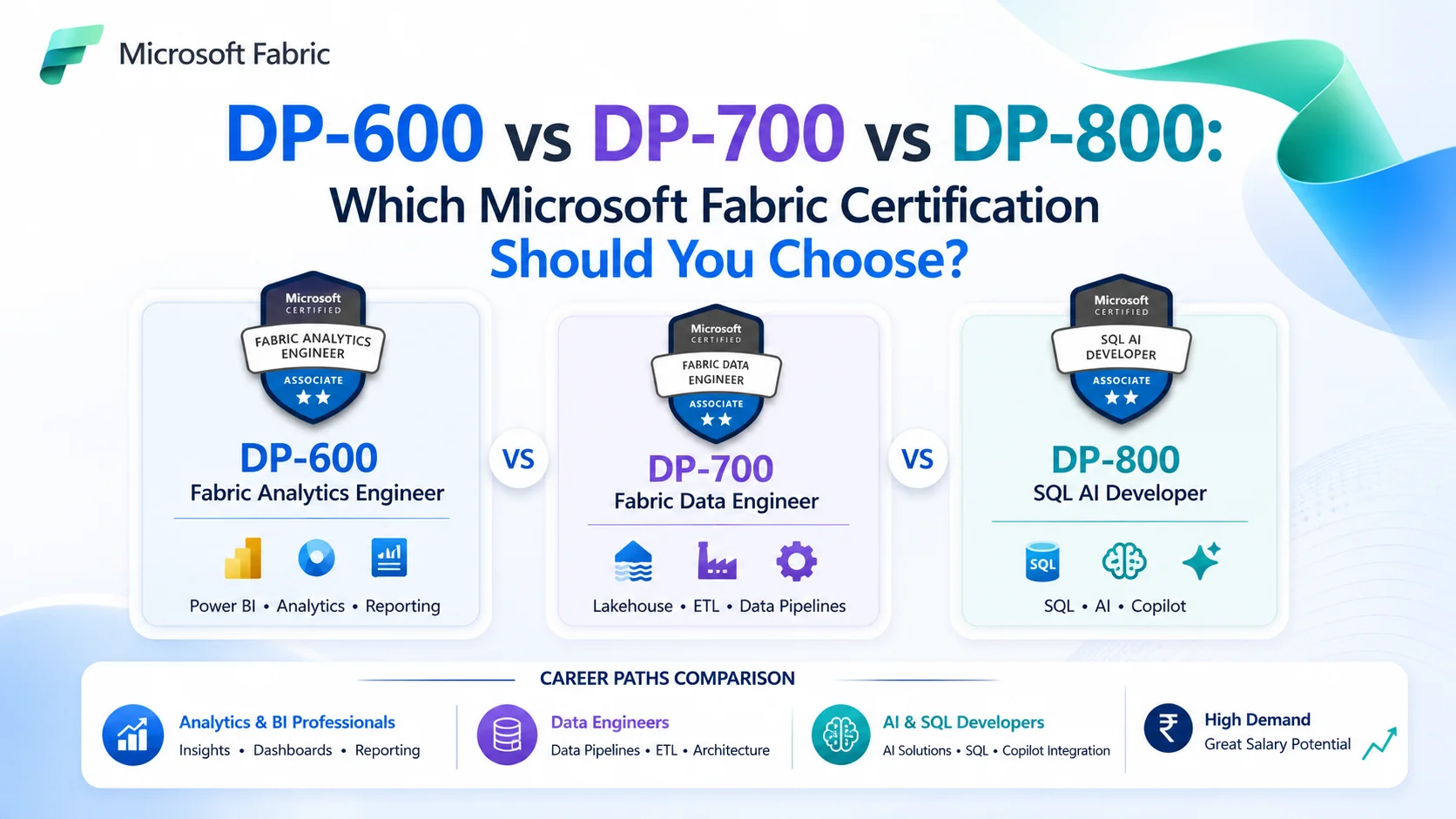
- What is the difference between DP-700 and DP-600? DP-700 focuses on data engineering, Apache Spark processing, pipeline orchestration, and physical lakehouse setup. DP-600 centers around downstream semantic modeling, DAX reporting logic, and star schema creation.
- What are the main prerequisites for DP-700? Candidates should possess solid database engineering skills, experience in PySpark or Scala, and a strong understanding of relational and dimensional database models.
- What is Liquid Clustering in Fabric? Liquid Clustering is a dynamic file layout optimization technique that allows tables to cluster data by multiple columns dynamically, avoiding over-partitioning.
- How do I handle CDC in Fabric? You can implement Change Data Capture (CDC) pipelines by ingestion via mirroring, utilizing Spark structured streaming, or loading files with Delta Lake MERGE operations.
- What is the Capacity Metrics App? It is a dashboard that allows Fabric administrators to monitor compute consumption (CU usage) across workspaces, helping identify expensive queries or notebooks.
- Can I use Scala on DP-700? Yes. Fabric notebooks support PySpark, Scala, Spark SQL, and Spark R. Basic Spark operations in Python or SQL appear most frequently on the exam.
- What is a shortcut in OneLake? Shortcuts are virtual links inside OneLake pointing to directories in ADLS, Amazon S3, or other workspaces without duplicating data.
- How do workspace roles work in Fabric? There are four roles: Admin, Member, Contributor, and Viewer. Admins and Members configure sharing, Contributors build items, and Viewers access reports and endpoints.
- What is data lineage in Microsoft Fabric? Lineage provides a visual graph showing how data flows from ingestion pipelines, through Lakehouse tables, and into semantic models and final Power BI dashboards.
- Does the DP-700 exam have case studies? Yes. Expect 1-2 complex case studies detailing business goals, architecture requirements, and technical issues that you must resolve.
- What is table mirroring? Mirroring is a low-latency SaaS replication technique that syncs data from databases (like Azure SQL or Snowflake) directly into OneLake in Delta format.
- Can I access Microsoft Learn during the exam? Yes. Microsoft allows access to its documentation database using an integrated browser window during the exam.
- How do I schedule pipelines? Pipelines can be triggered using time-based schedules, event-based alerts, or customized REST API webhooks.
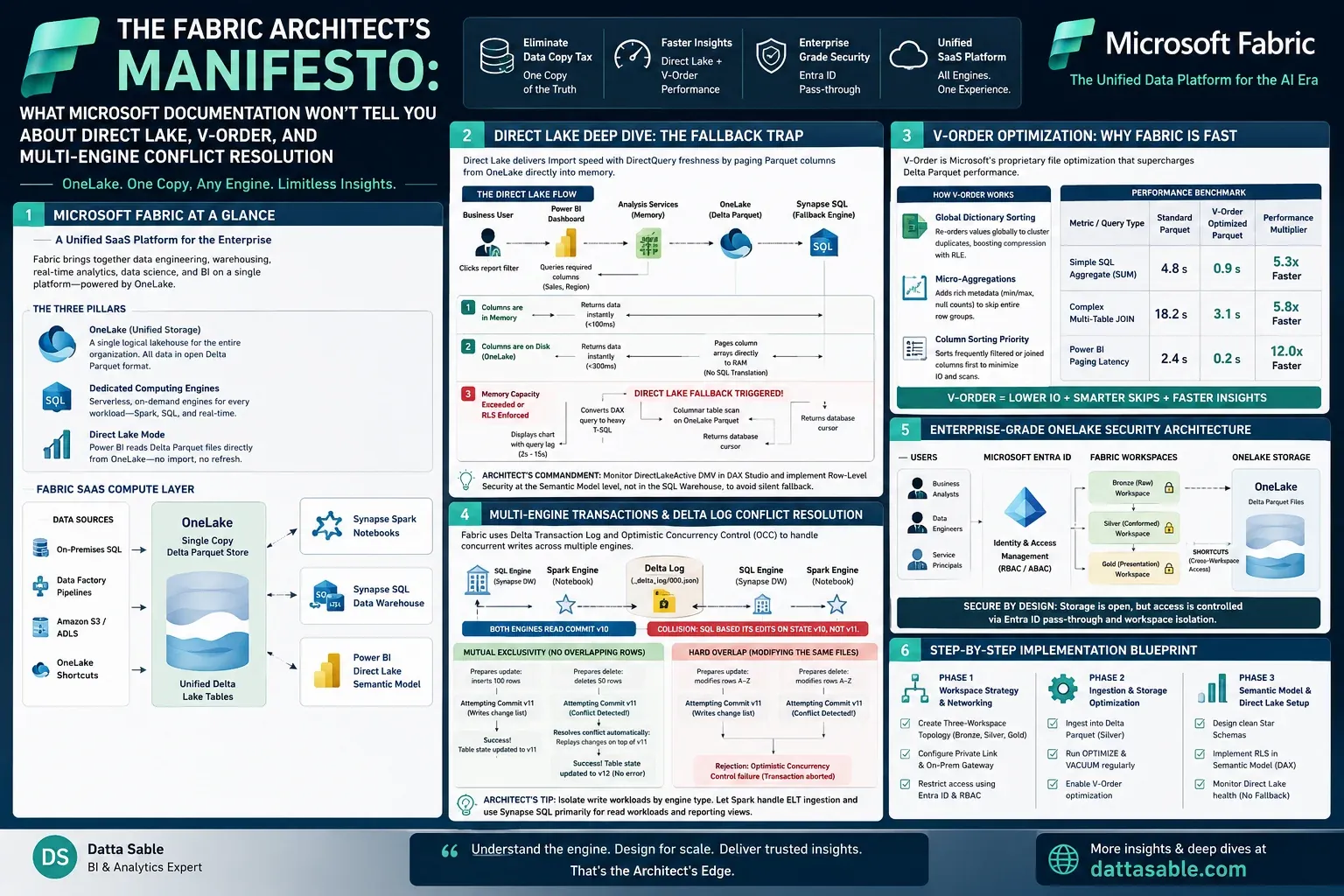
- What is V-Order? V-Order is a sorting enhancement applied to Parquet files during writing, accelerating downstream read operations for compute engines.
- How do I prepare for DP-700? Combine hands-on laboratory modules on Microsoft Learn, review code syntax, and leverage this comprehensive study guide.
Conclusion
Entering the data engineering field requires mastering the unified SaaS capabilities of Fabric. By following this DP-700 Study Guide 2026 and referencing our Microsoft Fabric Certification Comparison, you will be prepared to pass the exam.