
Master the DP-600 Exam Questions & Scenarios with this comprehensive practice guide. Passing the Microsoft Fabric Analytics Engineer certification requires more than memorizing terms; you must solve realistic enterprise data scenarios. In this guide, we walk through multi-choice questions, case studies, and code solutions with detailed explanations.
The DP-600 Exam Questions & Scenarios guide is designed to target complex concepts such as XMLA endpoints, workspace access roles, capacity management, and Direct Lake fallbacks. Reviewing these scenario assessments builds your confidence for exam day.
Scenario 1: OneLake Security & Workspace Sharing
Situation: You have a Fabric tenant with a workspace named HR_Prod. The workspace contains a Lakehouse named HR_Master. You need to grant the finance analytics team access to query tables in HR_Master without allowing them to modify or create new items in HR_Prod. What is the most secure method?
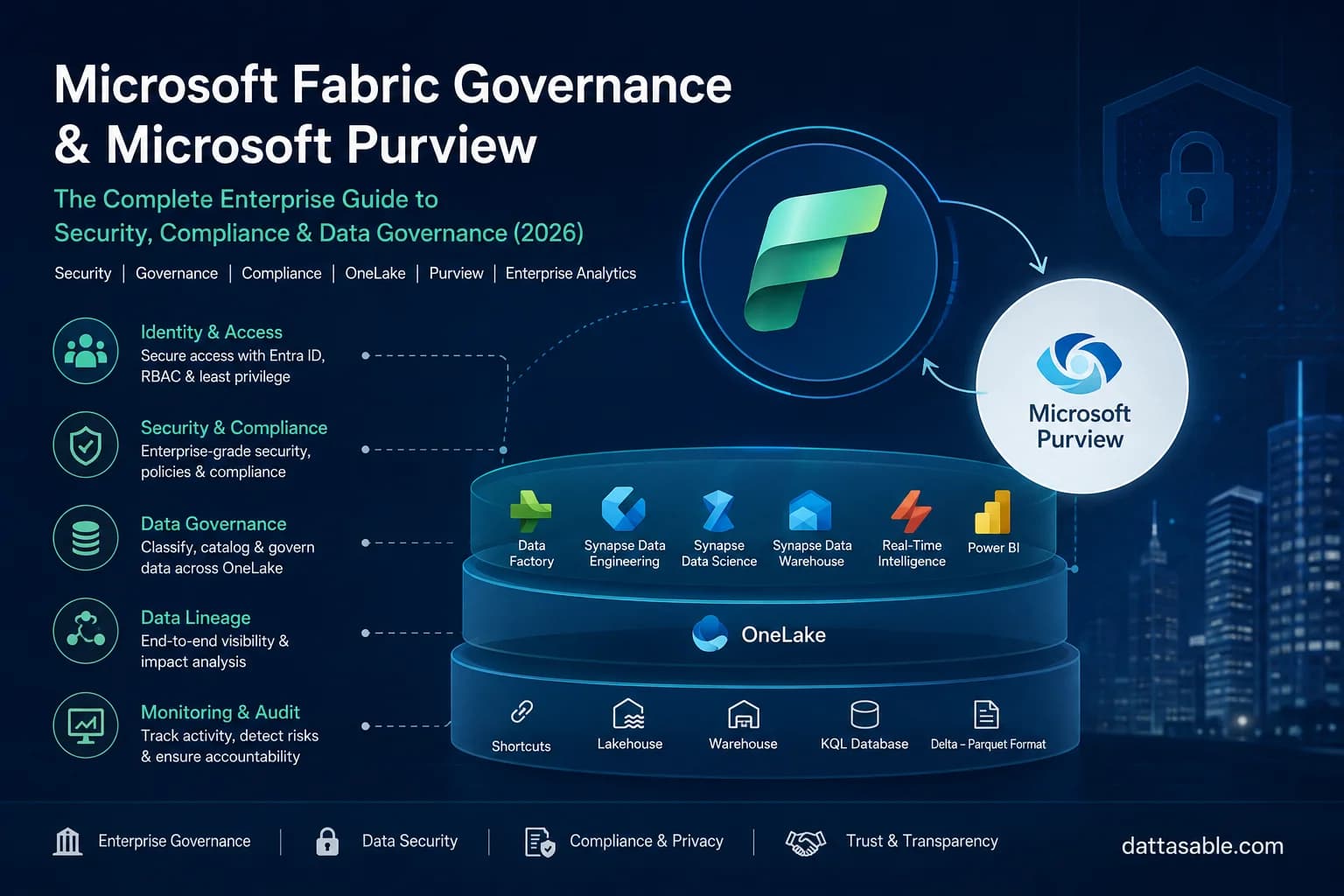
Answer: Create a new workspace named Finance_Prod. In Finance_Prod, create a **OneLake Shortcut** referencing the target tables in HR_Master. Grant the finance analytics team the Viewer role in Finance_Prod. This avoids granting direct access to the HR production workspace.
Scenario 2: Optimizing Direct Lake Fallback
Situation: Your team reports that a Power BI report connected to a Fabric Lakehouse is running slowly. Investigation reveals that the semantic model is falling back to DirectQuery mode. What is the most likely cause and solution?
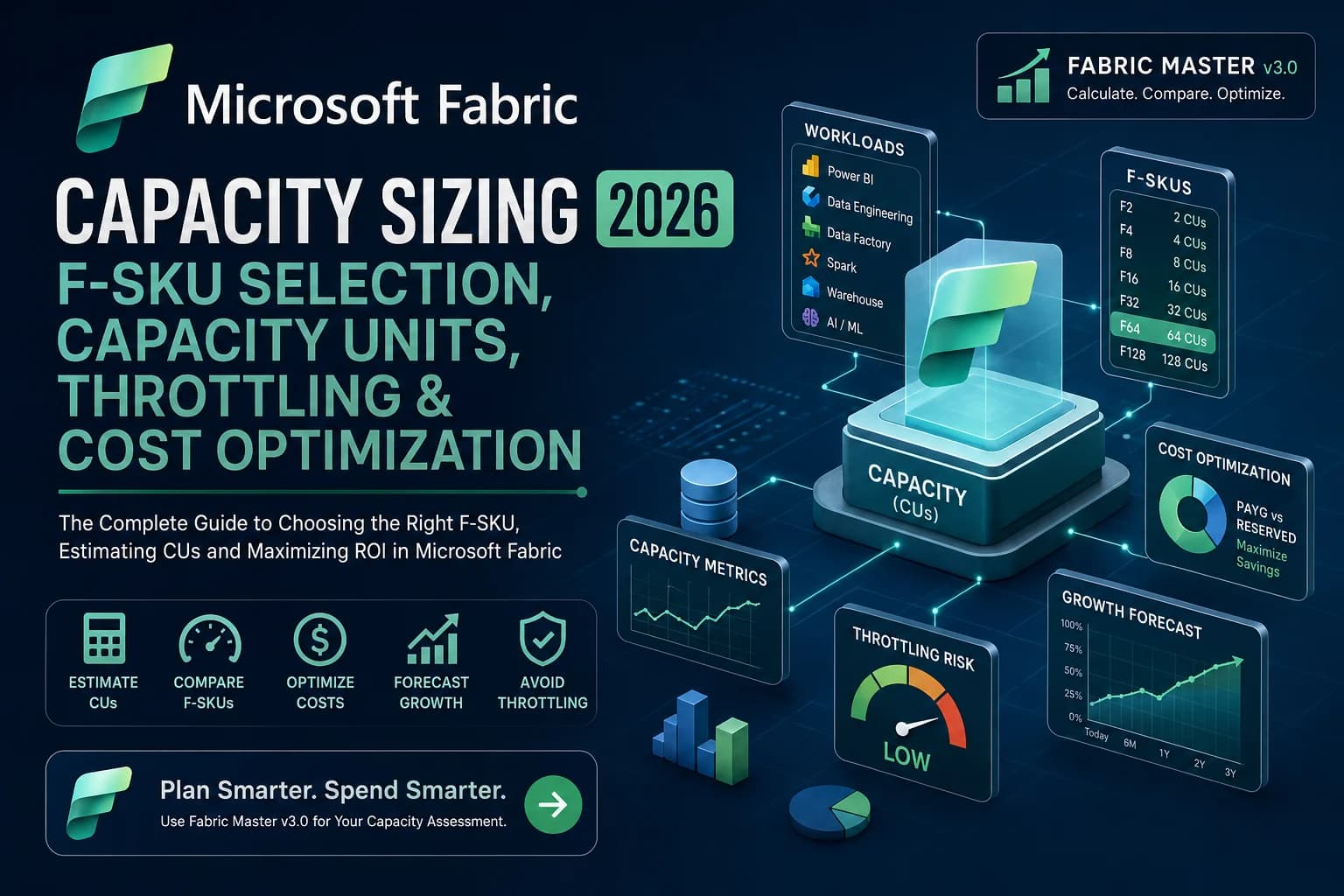
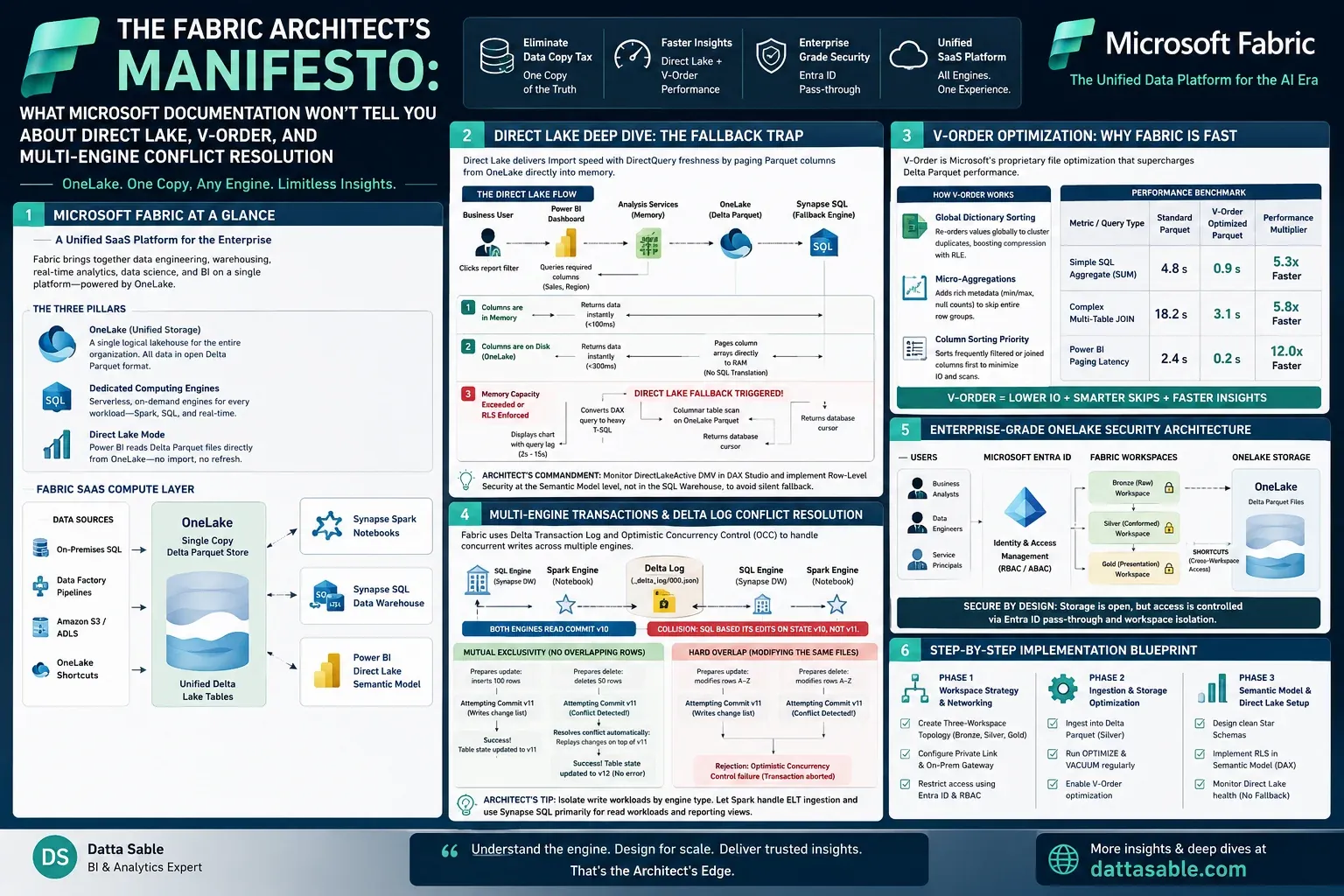
Answer: Fallbacks occur when the semantic model size exceeds the memory limit of the capacity, or when table changes are made without updating the semantic model metadata. The solution is to ensure the capacity is sized appropriately (F64 or higher is recommended for large models), enable automatic metadata sync, and run the OPTIMIZE command on the Delta tables to ensure they are sorted with V-Order.
Practice Questions & Detailed Answers
- Question: You are designing a data transformation strategy. You need to ingest raw JSON files from an S3 bucket and load them into a Delta table while maintaining transaction consistency. Which Fabric item should you use?
Answer: **Synapse Spark Notebook**. Spark natively supports robust JSON schema parsing and ACID transaction writes to Delta tables, offering superior performance compared to Dataflows Gen2 for complex file formats. - Question: You need to implement Row-Level Security (RLS) on a Direct Lake semantic model. Where should you define the security roles?
Answer: **Inside Power BI Desktop or the semantic model settings online**. RLS rules must be configured in the semantic model layer so they are dynamically applied when users query the reports. - Question: You need to analyze which reports in your Fabric capacity consume the most compute resources. Which tool should you use?
Answer: **Microsoft Fabric Capacity Metrics app**. This app provides granular CPU and memory consumption metrics for all items running on your capacity.
Career Opportunities
| Job Role | Average Salary (US) | Key Responsibilities |
|---|---|---|
| Fabric Analytics Engineer | $115,000 - $150,000 | Build semantic models, configure Direct Lake databases, write DAX calculations. |
| Lead BI Developer | $130,000 - $175,000 | Design enterprise star schemas, configure workspace governance, set security. |
Frequently Asked Questions (FAQ)
- How difficult is the DP-600 exam? The DP-600 is moderately difficult. It requires hands-on experience with Microsoft Fabric items and a deep understanding of data warehousing and Power BI modeling.
- Are there coding questions on the DP-600? Yes, expect questions requiring you to identify PySpark code lines or complete DAX expressions.
- What is the passing score? You need a scaled score of 700 or higher out of 1000 to pass.
- Can I take the exam online? Yes, you can schedule and take the exam online through Pearson VUE with remote proctoring.
- How long should I study for DP-600? Most candidates prepare for 4-6 weeks, spending 1-2 hours per day studying the exam domains.
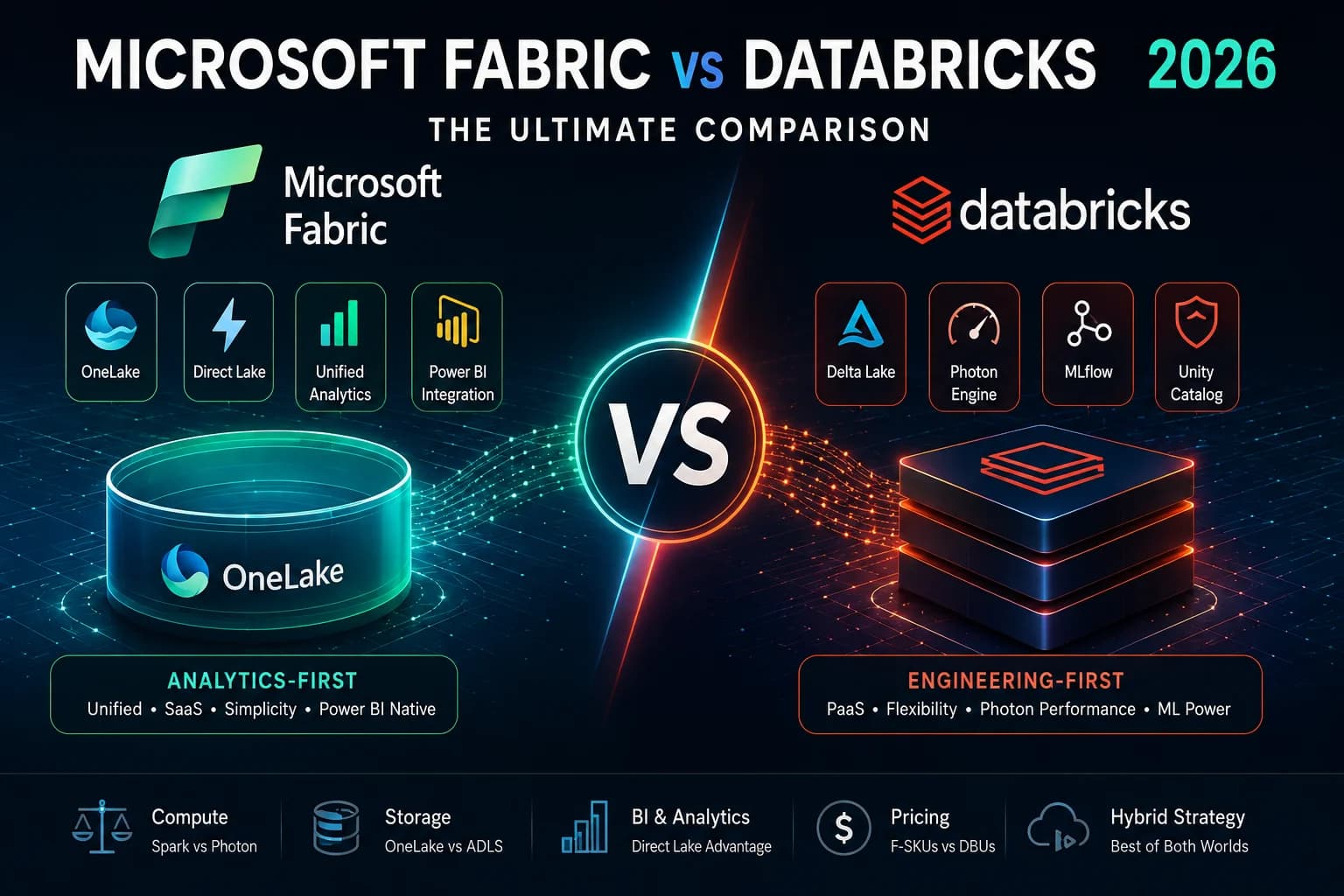
- What is the difference between direct lake and direct query? Direct Lake reads Delta tables directly from OneLake storage, offering import-mode speeds. DirectQuery queries SQL endpoints, which is slower.
- Does DP-600 cover data lake shortcuts? Yes, understanding when and how to build shortcuts to ADLS, S3, or GCS is a core requirement.
- What is a calculation group in Power BI? Calculation groups let you reduce the number of measures you build by grouping common DAX expressions (like MTD, YTD) together.
- How do I configure deployment pipelines? Deployment pipelines let you stage and move content across development, test, and production workspaces in Fabric.
- What is the XMLA endpoint? The XMLA endpoint allows third-party tools (like Tabular Editor or ALM Toolkit) to connect directly to Fabric semantic models.
- Does the exam test capacity monitoring? Yes, you should know how to read capacity utilization charts in the Capacity Metrics app.
- What is the Fabric Metastore? The Fabric Metastore automatically registers Delta tables, making them immediately queryable via SQL and Spark.
- How do I handle slow-running notebooks? You can optimize notebook performance by configuring V-Order, adjusting Spark executor sizes, or implementing clustering.
- What is the difference between a Contributor and a Member? Contributors can create and edit items. Members can also share items, modify workspace roles, and manage permissions.
- Is the DP-600 worth taking? Yes, it is the primary credential validating analytics engineering competencies in the Microsoft Fabric platform.
Conclusion
Solving scenario-based questions is the best way to prepare for the DP-600. Combined with our Complete DP-600 Study Guide and referencing the Microsoft Fabric Comparison, you are set for success.