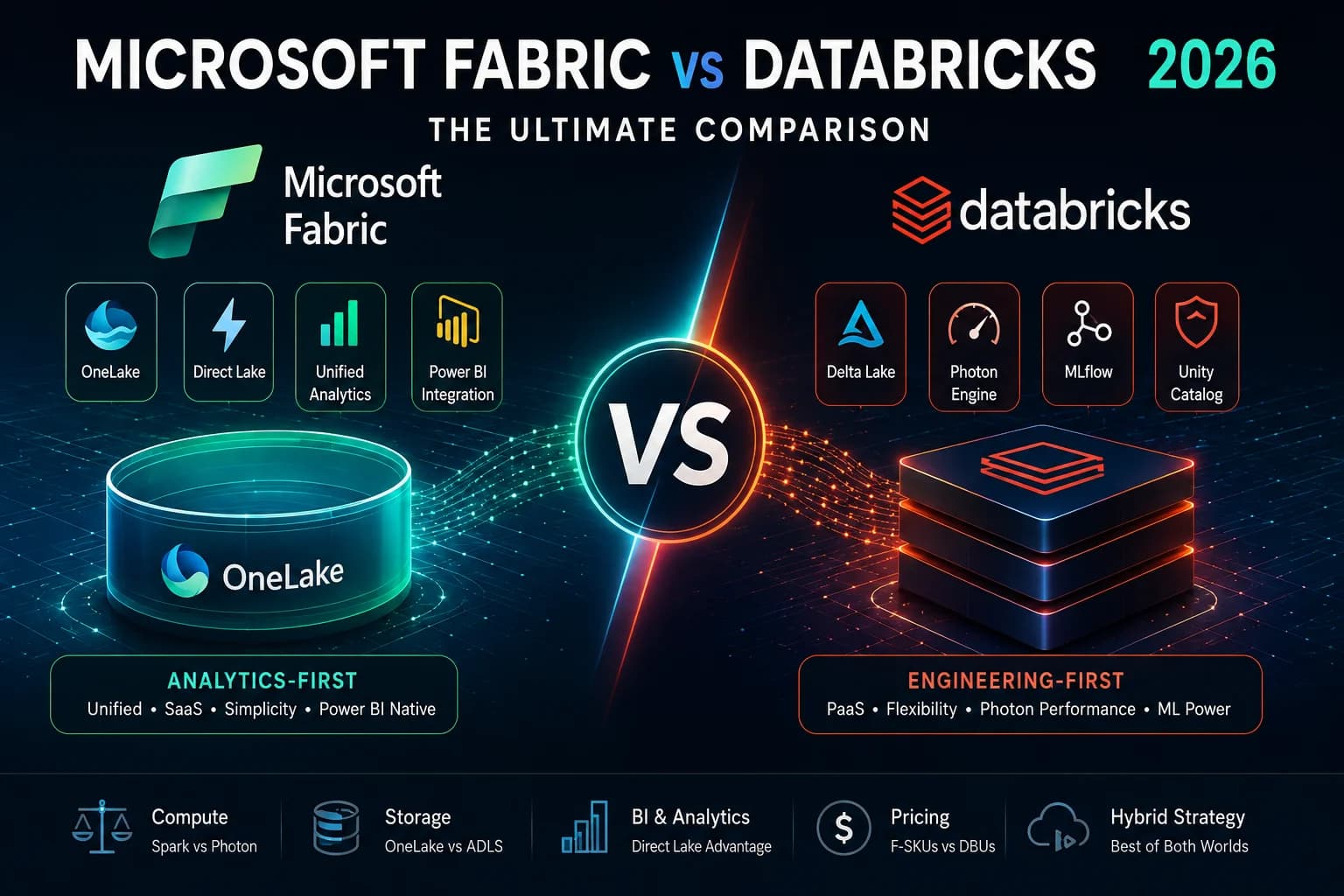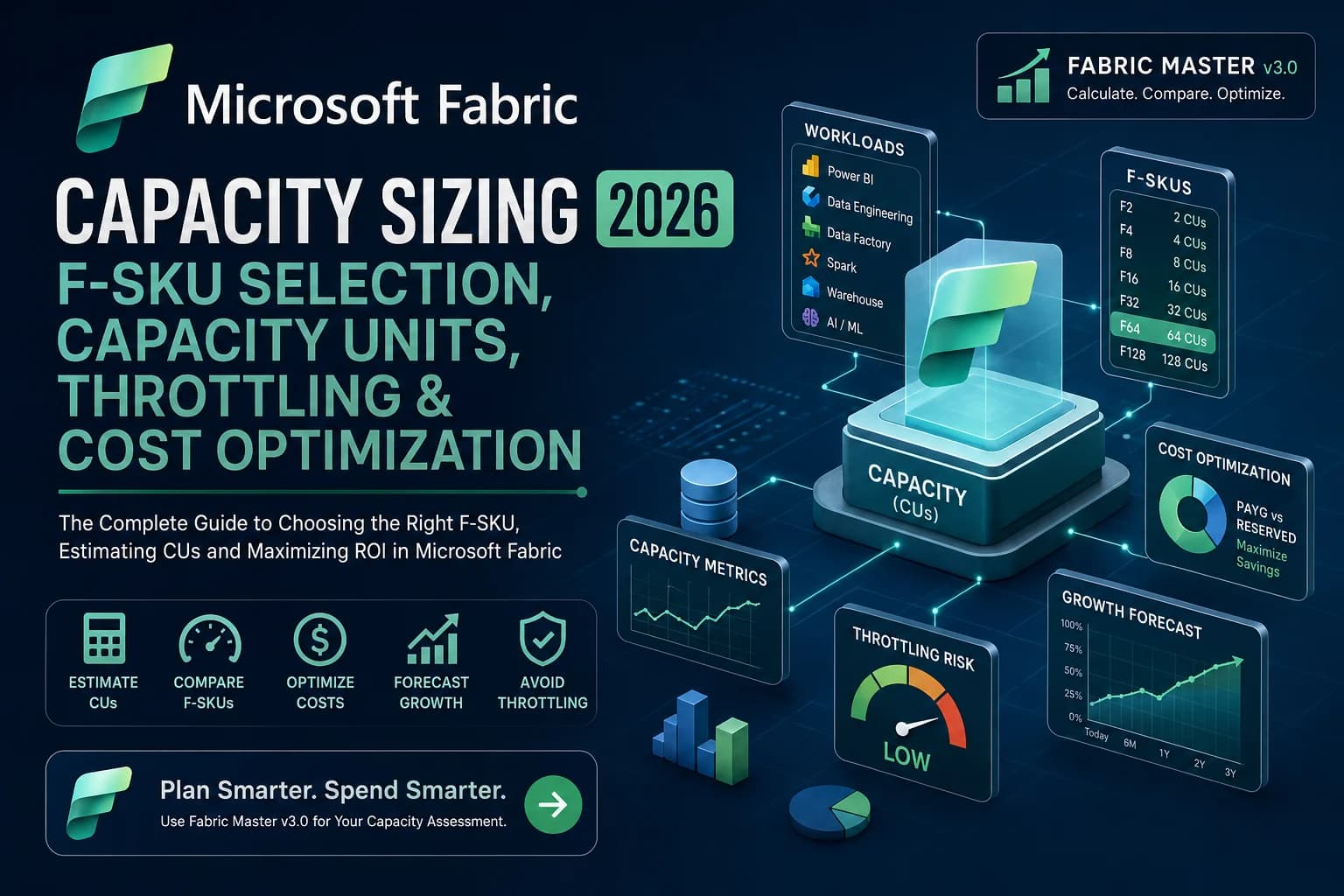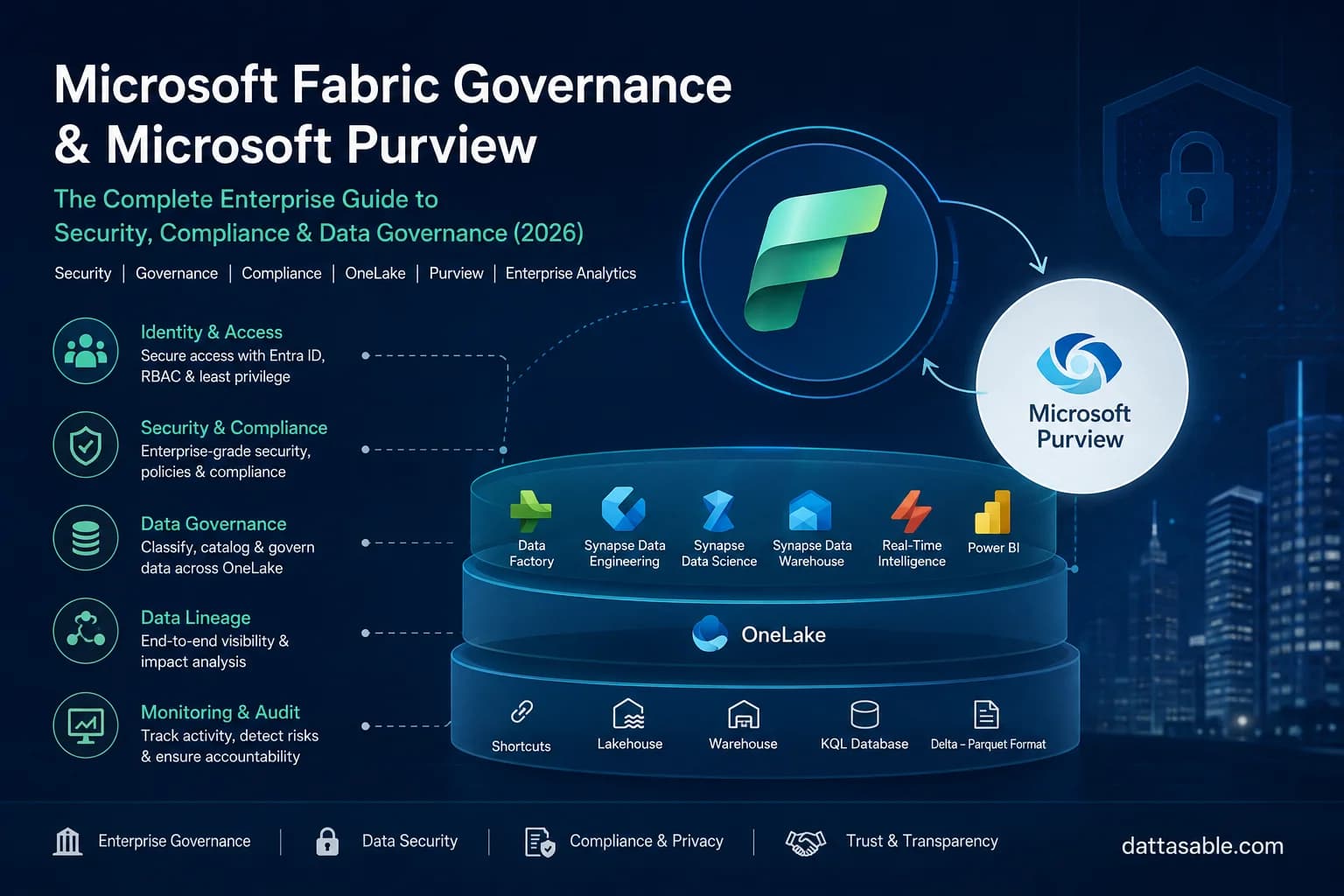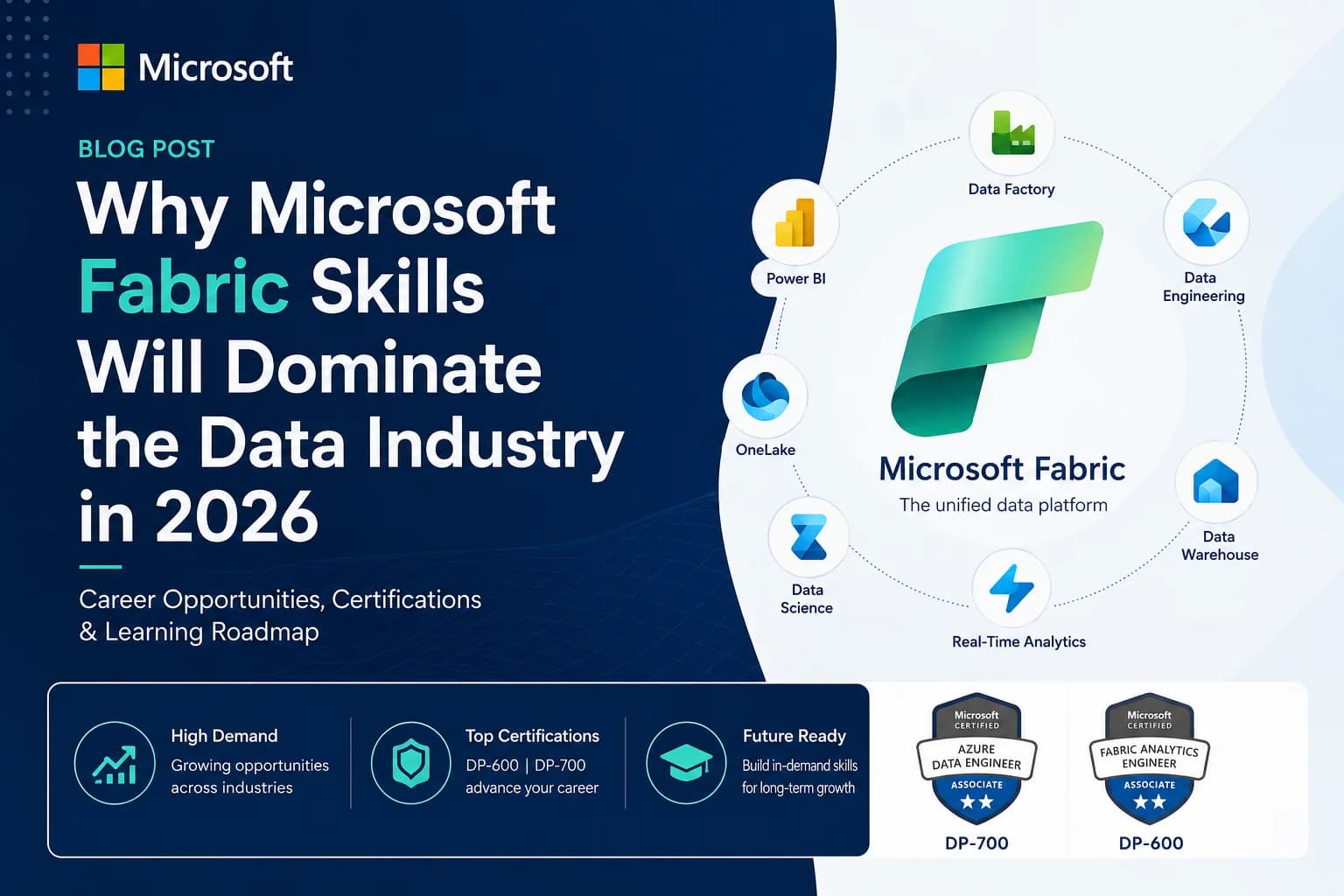

The enterprise data landscape is undergoing a massive shift. In 2026, the consolidation of data engineering, data warehousing, machine learning, and business intelligence into unified SaaS solutions has reached a tipping point. For data professionals, this is not just a change in tools; it is a fundamental shift in how data architectures are built and managed. Understanding how to leverage Microsoft Fabric—and choosing the right career specialization—is now the single highest-leverage decision you can make for your career growth. This deep-dive architectural and career guide explores why Microsoft Fabric skills will dominate the data industry in 2026, detailing salary benchmarks, certification paths (DP-600, DP-700, and DP-800), and a structured roadmap to mastery.
Historically, building an enterprise analytics system was a fragmented, expensive, and fragile endeavor. Data engineers wrote custom ETL pipelines in Apache Spark to extract and clean data. Database administrators managed complex schemas and indexes on dedicated relational data warehouses. BI developers imported data subsets into proprietary desktop applications to construct semantic models and visual dashboards. And data scientists built isolated environments to run machine learning models.
This fragmentation resulted in the infamous "data copy tax"—an architectural bottleneck where data was constantly copied, moved, and restructured across systems. This copy tax increased cloud storage costs, introduced synchronization latency, and compromised data security. Microsoft Fabric was designed from the ground up to eliminate this tax by introducing a unified, SaaS-based data lake called OneLake. By storing all enterprise data in open-source Delta Parquet format, multiple specialized compute engines can query the same physical data files simultaneously without making copies.
As organizations migrate their legacy data warehouses and lakes to this unified framework, traditional barriers between roles are disappearing. In 2026, the most successful data professionals are not those who specialize in connecting fragmented systems, but those who can optimize value and insights within a unified data fabric.
Table of Contents
- What is Microsoft Fabric? The Unified SaaS Architecture
- The Death of the "Data Copy Tax"
- The Primary Fabric Compute Engines
- The Four Dominant Fabric Career Paths
- Certification Strategy: DP-600 vs DP-700 vs DP-800
- Salary Benchmarks & Market Demand in 2026
- Visualizing the OneLake Architecture Flow
- 30-60-90 Day Strategic Roadmap to Fabric Mastery
- Frequently Asked Questions
I have spent over a decade designing, building, and automating enterprise BI and analytics architectures. This analysis combines hands-on migration experience, official Microsoft product roadmaps, and active hiring data to provide a realistic outlook on the data job market.
What is Microsoft Fabric? The Unified SaaS Architecture
Microsoft Fabric is a complete, unified analytics platform that brings together all the data tools an enterprise needs into a single Software-as-a-Service (SaaS) package. Fabric integrates data integration (Data Factory), data engineering (Synapse Spark), data warehousing (Synapse SQL), data science (Synapse ML), real-time intelligence (Kusto), and business intelligence (Power BI) into a single, cohesive environment.
Rather than purchasing, configuring, and connecting these services independently in Microsoft Azure—which requires managing virtual networks, security keys, storage firewalls, and resource limits—Fabric abstracts these infrastructure tasks away. Setting up a new enterprise data workspace in Fabric takes seconds, and all resources inherit a single security model, tenant capacity, and governance structure.
At the center of this unified platform is OneLake, a single logical data repository that serves the entire tenant. Think of OneLake as the "OneDrive for Data." Every workspace in a Fabric tenant stores its data inside OneLake, organized in a structured, hierarchical file system. The physical files are stored in Microsoft's open-source Delta Parquet format. Delta Parquet is a compressed, column-oriented storage format that supports ACID (Atomicity, Consistency, Isolation, Durability) transactions, schema enforcement, and version history (time travel).
The Death of the "Data Copy Tax"
To fully appreciate why Fabric skills are dominating the industry, you must understand the concept of Direct Lake mode. In traditional BI architectures, Power BI developers had to choose between two query modes:
- Import Mode: Data was copied from the data warehouse and loaded into the Power BI service's in-memory engine. While this provided extremely fast query performance, it required scheduling regular data refreshes, leading to latency and double-storage costs.
- DirectQuery Mode: Power BI did not store any data; instead, it sent SQL queries to the underlying database in real-time. While this ensured data was always fresh, it put a massive compute burden on the data warehouse and resulted in slow report load times.
Direct Lake mode eliminates this trade-off. Because OneLake stores data in Delta Parquet format, Power BI can read these parquet files directly from OneLake storage into memory on the fly. There are no data copies, no import schedules, and no DirectQuery translation overhead. You get the sub-second performance of Import Mode with the real-time freshness of DirectQuery, completely free of the data copy tax.
The Primary Fabric Compute Engines
Fabric's architecture decouples compute from storage. This allows multiple specialized compute engines to interact with the exact same data in OneLake. The table below compares the core Fabric engines that data teams utilize daily:
| Engine | Primary Technology | Best Used For | Key Capabilities |
|---|---|---|---|
| Lakehouse | Apache Spark (PySpark, Scala) | Data Engineering & Big Data ETL | High-speed file processing, programmatic data manipulation, custom validation. |
| Data Warehouse | Synapse SQL (T-SQL) | Relational DW & Semantic Views | Full DDL/DML support, cross-database querying, stored procedures, and relational modeling. |
| Real-Time Intelligence | Eventhouse & KQL | Streaming Data, Logs & IoT | Sub-second log search, vector database indexing, event streams, real-time alerting. |
| Data Science | Synapse ML, MLflow, Jupyter | ML Model Training & Predictions | Experiment tracking, auto-logging, native library integration for PyTorch/Scikit-Learn. |
| Data Factory | Dataflows Gen2 & Pipelines | Orchestration & Low-code ingestion | 150+ native connectors, visual mapping, loop activities, and conditional execution paths. |
The Four Dominant Fabric Career Paths
Because Fabric unifies multiple domains, the job market has aligned around four distinct technical paths. Each path represents a specific focus area within the Fabric ecosystem:
1. Analytics Engineer (The High-Value Generalist)
The Analytics Engineer sits between the data engineering and the reporting layers. Their primary responsibility is to transform cleaned tables inside the data lake into highly optimized, business-ready semantic models. Instead of building endless custom dashboards, they design the core "data assets" that the rest of the company queries.
- Core Responsibilities: Designing star schemas, writing complex DAX measures, configuring Direct Lake semantic models, managing workspace Git integration, and enforcing row-level security (RLS).
- Prerequisites: Deep SQL and intermediate-to-advanced DAX.
2. Data Engineer (The Infrastructure Builder)
The Data Engineer builds the pipelines, tables, and storage configurations that make analytics possible. They are responsible for ingestion latency, data deduplication, and overall storage costs.
- Core Responsibilities: Building Spark notebooks, configuring Medallion (Bronze/Silver/Gold) Lakehouse layers, scheduling Data Factory pipelines, and managing capacity pools.
- Prerequisites: Python (PySpark), SQL, and data lake architecture concepts.
3. BI Developer (The Strategic Storyteller)
The BI Developer translates clean data models into visual, interactive dashboards that executives and business teams use to make decisions.
- Core Responsibilities: Designing intuitive user interfaces, gathering business requirements, creating mobile-first dashboard layouts, and configuring Power BI Apps.
- Prerequisites: Data visualization theory, basic SQL, and UI/UX design.
4. SQL AI Developer (The Intelligent Integrator)
The SQL AI Developer is the newest role in the industry. As companies integrate large language models (LLMs) with relational databases, this developer builds RAG (Retrieval-Augmented Generation) patterns, semantic indexes, and automated agent workflows directly using database SQL engines.
- Core Responsibilities: Setting up vector indexes, generating text embeddings via SQL, orchestrating database agents, and connecting Eventhouses to live streaming APIs.
- Prerequisites: Advanced T-SQL, Python, and basic generative AI architectures.
Certification Strategy: DP-600 vs DP-700 vs DP-800
Microsoft offers three distinct certifications that align with these career paths. Choosing the right certification depends on your background and target career goals:
| Certification | Target Audience | Key Tested Skills | Why Choose It? |
|---|---|---|---|
| DP-600 (Analytics Engineer) | Power BI Developers, Analysts, SQL Pros | Direct Lake models, Star Schema design, complex DAX, XMLA endpoints, Fabric workspace Git integration. | Validates the transition from simple desktop reporting to enterprise-grade semantic modeling and SaaS administration. |
| DP-700 (Data Engineer) | Python Developers, Data Engineers, Cloud Engineers | Spark Pool sizing, PySpark ETL, Delta Lake optimizations, pipeline orchestration, capacity monitoring. | Establishes competence in building big data structures and managing cloud capacities within a secure tenant environment. |
| DP-800 (SQL AI Developer) | Database Admins, SQL Developers, AI Integrators | Vector database schemas, Azure OpenAI SQL extensions, Real-Time Eventhouses, KQL query writing. | Validates your ability to build intelligent, database-backed AI agents and real-time LLM query routing structures. |
Salary Benchmarks & Market Demand in 2026
As organizations move away from maintaining complex clusters (like traditional Azure Synapse, Databricks, or Snowflake) and embrace unified SaaS capacities, the demand for certified Fabric professionals has skyrocketed. Below is a realistic overview of average global salaries for mid-to-senior levels:
| Role | India (INR) | United States (USD) | United Kingdom (GBP) | Australia (AUD) |
|---|---|---|---|---|
| Analytics Engineer | ₹12,00,000 - ₹20,00,000 | $110,000 - $145,000 | £65,000 - £95,000 | $125,000 - $165,000 |
| Data Engineer | ₹14,00,000 - ₹26,00,000 | $125,000 - $175,000 | £75,000 - £110,000 | $135,000 - $185,000 |
| BI Developer | ₹8,00,000 - ₹15,00,000 | $90,000 - $125,000 | £50,000 - £75,000 | $95,000 - $130,000 |
| SQL AI Developer | ₹16,00,000 - ₹32,00,000 | $140,000 - $195,000 | £80,000 - £130,000 | $145,000 - $200,000 |
Visualizing the OneLake Architecture Flow
To succeed in certifications like DP-600 and DP-700, you must understand the data flow within Fabric. The architecture relies on OneLake acting as the single source of truth, with specialized engines running downstream analytics queries without copying files. For a complete technical deep-dive into OneLake's architecture — including Delta Lake foundations, V-Order, Shortcuts, Mirroring, Direct Lake, security, and migration paths — see our comprehensive OneLake Architecture Guide:
graph TD
    %% Define Node Styles
    style A fill:#0d1117,stroke:#2f363d,stroke-width:1px,color:#fff
    style B fill:#161b22,stroke:#30363d,stroke-width:1px,color:#fff
    style C fill:#161b22,stroke:#30363d,stroke-width:1px,color:#fff
    style D fill:#21262d,stroke:#30363d,stroke-width:1px,color:#fff
    style E fill:#00e5ff,stroke:#00e5ff,stroke-width:2px,color:#000
    style F fill:#21262d,stroke:#30363d,stroke-width:1px,color:#fff

    A[Source Systems: SQL Server, APIs, IoT] -->|Data Factory Pipelines / Dataflows Gen2| B[Bronze Lakehouse: Raw files & semi-structured JSON]
    B -->|PySpark Spark Notebook clean & validate| C[Silver Lakehouse: Structured Delta Parquet tables]
    C -->|Auto-Create relational connections| D[Lakehouse SQL Endpoint: Read-only Views & Queries]
    C -->|Spark Notebook calculations & joins| F[Gold Lakehouse: Optimized Star Schema tables]
    F -->|Direct Lake connection - zero latency| E[Power BI: In-memory semantic models & reports]
30-60-90 Day Strategic Roadmap to Fabric Mastery
Mastering Microsoft Fabric is about forming a deep understanding of core data principles and applying them inside the workspace. Use this 90-day plan to navigate your learning journey:
Phase 1: The Foundation (Days 1–30)
Focus on mastering data manipulation languages and relational storage concepts. If you cannot write clean, optimized SQL, you will struggle to build performant pipelines or semantic models.
- Learn Relational SQL: Focus on window functions (ROW_NUMBER, LEAD, LAG), Common Table Expressions (CTEs), and query execution plans. Practice query structure using LeetCode or SQLZoo.
- Explore Fabric trial mechanics: Sign up for a free Fabric trial account. Practice creating lakehouses, loading raw files (CSV, JSON), and querying them using the SQL Endpoint.
- Learn Star Schema basics: Understand facts, dimensions, and active/inactive relationships in data models.
Phase 2: The Core Specialization (Days 31–60)
Branch into your chosen path (DP-600 or DP-700) and build small, focused, functional projects.
- For Analytics Engineers (DP-600): Master DAX (context transition, CALCULATE, and time-intelligence). Study Direct Lake mode in Power BI. Install DAX Studio to analyze memory usage and optimize measures.
- For Data Engineers (DP-700): Learn PySpark DataFrame APIs. Build a pipeline that reads from an API, saves raw files in Bronze, cleanses them into Silver, and aggregates them into Gold tables in a Fabric Lakehouse.
- For SQL AI Developers (DP-800): Study vector embeddings and Azure SQL vector indexing. Learn to call OpenAI APIs using native T-SQL stored procedures.
Phase 3: The Enterprise Portfolio (Days 61–90)
Build and document a full end-to-end project. Do not make a basic, single-page dashboard. Build a real system that showcases your architectural understanding.
- Build a portfolio project: Ingest real-time streaming data, process it using Fabric notebooks, orchestrate the layers using Data Factory, configure an optimized semantic model in Direct Lake mode, and present the results in an interactive dashboard.
- Deploy to Git: Connect your Fabric workspace to a GitHub repository. Write a detailed README file explaining your architectural decisions, data modeling structure, and performance optimization steps.
- Take the exam: Take official Microsoft practice tests and schedule your certification exam (DP-600, DP-700, or DP-800).
Frequently Asked Questions
Q1: Is Microsoft Fabric replacing Power BI?
No. Power BI is a core component of Microsoft Fabric. Power BI remains the reporting and reporting interface, while Fabric provides the backend infrastructure—such as OneLake, Lakehouses, Spark pools, and data warehousing—to support enterprise-grade dashboards at scale.
Q2: What is the difference between a Lakehouse and a Data Warehouse in Fabric?
A Lakehouse uses Apache Spark as its primary compute engine and is optimized for writing programmatic ETL code (using Python/Scala) against raw files. A Data Warehouse is optimized for traditional SQL database developers and supports full T-SQL DDL/DML, transactional stored procedures, and schema indexes.
Q3: How does Direct Lake mode differ from Import Mode?
Import Mode copies data from the source database and loads it into Power BI's memory, requiring regular scheduled data refreshes. Direct Lake mode does not copy data; it reads the Delta Parquet files directly from OneLake on the fly, eliminating refreshes and double storage while maintaining sub-second query speeds.
Q4: Can I study for the DP-600 and DP-700 at the same time?
There is about a 30% overlap in topics (such as OneLake, workspace security, Data Factory pipelines, and basic SQL Endpoint usage). However, the DP-600 requires deep DAX and semantic modeling knowledge, while the DP-700 requires Spark notebook optimization and big data configurations. It is recommended to master one before moving to the other.
Related Resources & Internal Links
To further expand your expertise in advanced data architectures and artificial intelligence, explore these detailed technical write-ups:
- The Ultimate DP-800 Study Guide 2026: Passing Microsoft's SQL AI Developer Exam
- Architecting Compound AI Systems: A Microsoft Fabric and Python Guide
- The Fabric Architect’s Manifesto: The Unofficial Microsoft Fabric Architectural Guide
Build Professional Architecture Flowcharts Instantly
We built a custom Mermaid diagram optimizer specifically for data architects. Create, edit, and export visual blueprints in seconds.
Try Mermaid Forge →Want to become a Microsoft Fabric Architect?
Start here to scale your data engineering career with our certification resources and mentorship paths.